Ignore These 2026 Offensive Line Rankings at Your Own Risk
Don't Care About Offensive Lines? You Should!
Offensive line? *YAWN*
If that's your reaction ... reconsider.
Your fantasy league uses QBs and RBs, right?
Well, have you ever seen a RB gain yards with no blocking? Or a QB throw from his back?
Offensive line play isn’t the main driver of fantasy production, but it’s worth digging into if you’re looking for draft-day edges.
Just How Impactful is Offensive Line Play?
A few years ago, we looked at the positional correlation between offensive line performance and fantasy production.
The takeaway: RBs are affected most by O-line play, followed by QBs and then pass catchers.
Keep that in mind as you view the 2026 offensive line rankings below.
Notes: Pro Football Focus, ESPN, and pressure rate rankings shown below are from the 2025 season. Our 2026 O-line rankings account for last year’s performance, offseason personnel changes, and any lingering injury situations.
Best Offensive Lines 2026 (Tier 1)
1. Denver Broncos
- PFF Pass Blocking Grade: first
- PFF Run Blocking Grade: seventh
- ESPN Pass Block Win Rate: eighth
- ESPN Run Block Win Rate: fourth
- Adjusted Sack Rate Allowed: first
Projected starters:
| LT | LG | C | RG | RT |
| Garett Bolles | Ben Powers |
Luke Wattenberg | Quinn Meinerz | Mike McGlinchey |
The Broncos’ O-line enters 2026 with rare continuity after bringing back all five starters. Bolles and McGlinchey gave up just 2 sacks combined, and the group ranked sixth in adjusted yards before contact per attempt. (That metric removes kneel downs, scrambles, and QB sneaks.)
If Denver has a weakness, it’s Powers at LG after a torn biceps cost him most of last season and kept him out of mandatory minicamp in June. HC Sean Payton downplayed any concern, though.
“Ben’s doing well," Payton said. "Ben’s right on schedule to where we thought he’d be at this point.”
Denver received below-average PFF grades from Alex Palczewski as an injury replacement in both run blocking and pass blocking, making Powers’ return a meaningful boost for Bo Nix and the ’ crowded backfield of J.K. Dobbins, RJ Harvey, and Jonah Coleman.
TIP
Get the complete fantasy outlook with our Denver Broncos team preview.
2. Buffalo Bills
- PFF Pass Blocking Grade: fourth
- PFF Run Blocking Grade: sixth
- ESPN Pass Block Win Rate: fourth
- ESPN Run Block Win Rate: first
- Adjusted Sack Rate Allowed: 21st
Projected starters:
| LT | LG | C | RG | RT |
| Dion Dawkins | Alec Anderson | Connor McGovern | O'Cyrus Torrence | Spencer Brown |
Buffalo joins Denver in bringing back a reliable tackle duo.
LG is the spot to watch after David Edwards left in free agency. Only the Ravens posted a higher adjusted rushing yards before contact per attempt than Buffalo last season, so replacing a steady contributor matters.
“Dave is almost like another center on the football field,” LT Dion Dawkins said in January. “He's one of my favorite guards that I've played with since I've been in the league.”
Alec Anderson and Austin Corbett are the top contenders to replace Edwards. Anderson has made only five starts at LG over the past two seasons and graded better as a run blocker than a pass protector, per PFF. Corbett brings veteran experience but durability concerns after an MCL tear in 2025 and a torn biceps in 2024.
Even below average LG play probably wouldn’t be enough to sink a unit that’s finished top-10 in points and yards in six straight seasons. The rest of the line is strong enough to keep supporting high-end fantasy outcomes for Josh Allen and James Cook.
TIP
Get the complete fantasy outlook with our Buffalo Bills team preview.
3. Chicago Bears
- PFF Pass Blocking Grade: sixth
- PFF Run Blocking Grade: third
- ESPN Pass Block Win Rate: first
- ESPN Run Block Win Rate: fifth
- Adjusted Sack Rate Allowed: second
Projected starters:
| LT | LG | C | RG | RT |
| Braxton Jones | Joe Thuney | Garrett Bradbury | Jonah Jackson | Darnell Wright |
This line took a hit with Drew Dalman’s surprise retirement, but the Bears didn’t leave themselves thin at center.
They traded for former Round 1 pick Garrett Bradbury and spent a 2026 second-rounder on Iowa’s Logan Jones, who made 51 college starts. Analyst Daniel Jeremiah called Jones a “Day 1 starter” during NFL Network’s draft coverage.
Fantasy managers should feel good about the Thuney-Jackson-Wright nucleus, but LT still bears watching after a 2024 ankle fracture impacted Jones’ play last season.
“His comfort level has risen, just in terms of knowing what to do and how we want to get it done,” HC Ben Johnson said in June via The Athletic. “I think this is the best his body has felt in a while. So we’re really encouraged with where he’s at.”
Caleb Williams can help cover up issues at LT because he extends plays so well. He led the league in average time to throw last year at 3.23 seconds and cut his pressure-to-sack rate from 28.2% as a rookie to 9.6%.
TIP
Get the complete fantasy outlook with our Chicago Bears team preview.
4. Pittsburgh Steelers
- PFF Pass Blocking Grade: second
- PFF Run Blocking Grade: 18th
- ESPN Pass Block Win Rate: third
- ESPN Run Block Win Rate: ninth
- Adjusted Sack Rate Allowed: ninth
Projected starters:
| LT | LG | C | RG | RT |
| Troy Fautanu | Mason McCormick | Zach Frazier | Spencer Anderson | Dylan Cook/Max Iheanachor |
Pittsburgh’s pass protection wasn’t heavily tested last year, with Aaron Rodgers averaging 2.58 seconds to throw, the third-quickest mark among 38 QBs with 200+ attempts.
That helps explain why Pittsburgh allowed the league’s lowest pressure rate at 22.3%.
Still, there’s obvious talent up front. The Steelers roster three Round 1 OTs in Fautanu, Iheanachor, and Broderick Jones, though only Fautanu looks locked into a starting job. He’s moving from RT to LT, his primary college position.
The Steelers and new OL coach James Campen are also moving McCormick from RG to LG.
“When we moved [McCormick], we kept them together. That was not an afterthought,” Campen said via the Pittsburgh Post-Gazette. “Communication is very important. When you go from the left side to the right side ... it’s different and it takes time. You have to be adaptable and adjustable, and they are.”
Jones is coming off March neck surgery, and Iheanachor still needs to beat out 2025 fill-in starter Dylan Cook, who allowed only nine pressures in 226 pass-blocking reps last year. That competition gives Pittsburgh useful depth, especially considering only the Jets used the same O-line for all 17 games last season.
TE Darnell Washington gives Pittsburgh a rare blocking presence at 6’7 (and at least) 264 pounds. He finished last year with the fifth-best PFF run-blocking grade among 62 qualifiers with at least 200 run-blocking snaps, then signed a four-year extension in June.
Altogether, this is a strong group for new HC Mike McCarthy.
TIP
Offensive line play is always factored into our updated 2026 fantasy football rankings.
5. Los Angeles Rams
- PFF Pass Blocking Grade: 21st
- PFF Run Blocking Grade: first
- ESPN Pass Block Win Rate: fifth
- ESPN Run Block Win Rate: second
- Adjusted Sack Rate Allowed: fourth
Projected starters:
| LT | LG | C | RG | RT |
| Alaric Jackson | Steve Avila |
Coleman Shelton | Kevin Dotson | Warren McClendon Jr. |
The Rams’ O-line performed at a high level last year despite getting only seven games from longtime RT Rob Havenstein.
That loss barely slowed them down because Warren McClendon Jr. broke out, especially in the run game, where he ranked 13th among 67 qualifying OTs in PFF run-blocking grade.
LT Alaric Jackson gives the Rams another talented piece on the opposite side after posting a career-best 86.1 PFF run-blocking grade. Availability is the concern after he missed two games in 2024 for violating the personal conduct policy and now could face another suspension after an arrest on a domestic violence charge.
This unit would rise a couple of spots without the uncertainty at LT. Beyond Jackson's status, it’s a favorable setup for Matthew Stafford, who faced pressure on just 29.8% of his 2025 dropbacks. That ranked third-lowest among 38 qualifying QBs.
TIP
Get the complete fantasy outlook with our Los Angeles Rams team preview.
Above Average Offensive Lines (Tier 2)
6. Philadelphia Eagles
7. Tampa Bay Buccaneers
8. Atlanta Falcons
9. Detroit Lions
10. Indianapolis Colts
11. Seattle Seahawks
12. Minnesota Vikings
13. San Francisco 49ers
14. Los Angeles Chargers
Average Offensive Lines (Tier 3)
15. Carolina Panthers
16. New York Giants
17. Dallas Cowboys
18. Baltimore Ravens
19. New England Patriots
20. New York Jets
21. Kansas City Chiefs
22. Las Vegas Raiders
Below Average Offensive Lines (Tier 4)
23. New Orleans Saints
24. Washington Commanders
25. Cincinnati Bengals
26. Jacksonville Jaguars
27. Green Bay Packers
28. Arizona Cardinals
29. Tennessee Titans
Concerning Offensive Lines (Tier 5)
30. Houston Texans
- PFF Pass Blocking Grade: 22nd
- PFF Run Blocking Grade: 21st
- ESPN Pass Block Win Rate: 30th
- ESPN Run Block Win Rate: 32nd
- Adjusted Sack Rate Allowed: eighth
Projected starters:
| LT | LG | C | RG | RT |
| Aireontae Ersery | Wyatt Teller |
Keylan Rutledge | Ed Ingram | Braden Smith |
The Texans need Ersery to make a second-year leap at LT.
He arrived as an early Round 2 pick after three years starting on the left side in college, and he has the size at 6’6 and 331 pounds. But his rookie-year results were ugly: 48 pressures allowed, third-most among OTs on the sixth-most pass-blocking opportunities, plus a 62nd-place PFF run-blocking grade among 67 qualifying OTs.
Houston added Teller, Rutledge, and Smith, but none come without questions. Calf and knee injuries cost Teller four games across 2024 and 2025. He turns 32 in November and likely has his best football behind him.
Rutledge arrived as a Round 2 pick after four years at RG, but he’ll move to center in Houston, where he’s expected to beat out Jake Andrews for the starting job. That transition still brings risk.
Smith, an eight-year veteran, doesn’t carry many talent questions. Availability is an issue, though, after he missed four games in 2025, five in 2024, and seven in 2023.
The line still looks fragile, adding another hurdle for C.J. Stroud after last year’s QB21 finish in fantasy points per game.
TIP
Get the full fantasy outlook with our Houston Texans team preview.
31. Miami Dolphins
- PFF Pass Blocking Grade: 31st
- PFF Run Blocking Grade: 27th
- ESPN Pass Block Win Rate: 24th
- ESPN Run Block Win Rate: 29th
- Adjusted Sack Rate Allowed: 18th
Projected starters:
| LT | LG | C | RG | RT |
| Patrick Paul |
Kadyn Proctor |
Aaron Brewer | Jonah Savaiinaea | Austin Jackson |
Brewer gives Miami a reliable anchor up front after finishing first among 42 qualifiers in PFF run-blocking grade and 11th in pass-blocking grade last year. The Dolphins backed that up with a three-year extension in June.
But the rest of the line is far less settled, starting with Proctor, a 6’6, 352-pound college OT moving to a new position. His size should help in the run game, but both the transition and his college history of weight-management issues and shoulder trouble, which led to surgery last January, add uncertainty.
Savaiinaea is moving from LG to the right side after allowing a guard-high 45 pressures as a rookie, and Jackson remains another question after missing 11 games last season and 24 from 2022-2024.
There’s talent here, but not enough stability to elevate Malik Willis’ fantasy outlook.
TIP
Get the complete fantasy outlook with our Miami Dolphins team preview.
32. Cleveland Browns
- PFF Pass Blocking Grade: 31st
- PFF Run Blocking Grade: 29th
- ESPN Pass Block Win Rate: 20th
- ESPN Run Block Win Rate: 24th
- Adjusted Sack Rate Allowed: 26th
Projected starters:
| LT | LG | C | RG | RT |
| Spencer Fano | Zion Johnson |
Elgton Jenkins |
Teven Jenkins | Tytus Howard |
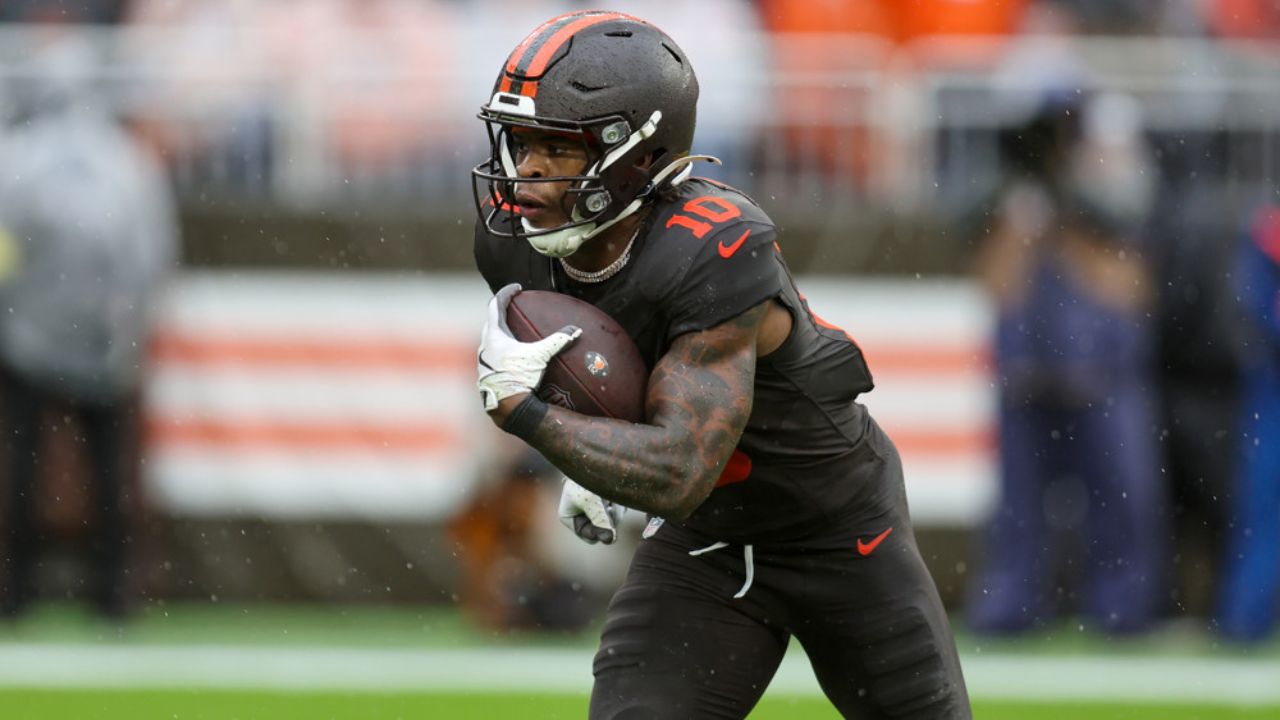
The Browns overhauled their O-line and will likely open 2026 with five new starters, a necessary response to an ugly 2025. It also leaves this group carrying plenty of risk.
Cleveland spent the ninth overall pick on Utah OT Spencer Fano, who started at LT before playing RT over the final two years of his college career and will return to the left side in the pros. He brings excellent athleticism with a 9.74 Relative Athletic Score at 6’5 and 311 pounds, but NFL Network’s Lance Zierlein noted concerns with his “pad level and core strength,” making his training-camp development worth tracking.
The rest of the line looks more patched together than solved, even with RT Tytus Howard still offering useful pass protection after allowing just one hit and zero sacks over 696 snaps in 2025. His run-blocking grade, though, was the second-worst of his career.
Johnson brings a Round 1 pedigree at LG and is still only 26, but he’s never graded out better than average as a pass or run blocker. Elgton Jenkins is coming off a Week 10 leg fracture and made only 10 starts at center for Green Bay over the past five seasons, while RG Teven Jenkins made only four late-season starts for Cleveland and has never started a full season.
There’s more talent here than Cleveland had last year, but it’s tough to project a quick turnaround. That removes some appeal from Quinshon Judkins after his 2025 ended with a fractured fibula and dislocated ankle.
TIP
Get the full fantasy outlook with our Cleveland Browns team preview.
Go Beyond Offensive Lines
More than a dozen factors -- including our award-winning projections, ADP, and team needs -- combine to give you the best fantasy football draft tool.
When you're ready, you'll need just a minute to create a Draft War Room.